Imagine you’ve spent months developing a new beverage concept. You’ve refined the formula, tested different flavors, designed the packaging, and mapped out your launch strategy. Now comes one of the most important decisions—choosing the right manufacturing partner.
At first glance, several beverage manufacturers may seem equally qualified. They offer similar production capacity, competitive pricing, and a wide range of OEM or private label services. But when you look closer, one factor often sets them apart: BRCGS certification.
For many global buyers, retailers, importers, and beverage brands, working with a BRC certified beverage manufacturer is no longer just a preference—it has become an important part of supplier selection. BRCGS certification demonstrates that a manufacturer follows internationally recognized food safety, quality, and operational standards, giving customers greater confidence in every stage of production.
In today’s competitive beverage industry, product quality alone is no longer enough. Brands also need manufacturing partners that can ensure consistency, maintain traceability, reduce operational risks, and meet the increasingly strict requirements of international markets.
Whether you’re launching a private label beverage, expanding your product portfolio, or looking for a reliable OEM partner, understanding the value of BRCGS certification can help you make a more informed manufacturing decision.
In this article, we’ll explain what BRCGS certification is, why it matters in beverage manufacturing, and how choosing a BRC certified beverage manufacturer can support your brand’s long-term growth in global markets.
What Is BRCGS Certification?
BRCGS, formerly known as the British Retail Consortium Global Standards, is one of the world’s most widely recognized food safety certification programs.
Originally developed for retailers in the United Kingdom, BRCGS has evolved into an internationally accepted benchmark for food manufacturers, packaging suppliers, storage facilities, and distributors. Today, manufacturers in more than 130 countries use the standard to demonstrate their commitment to food safety, product quality, and operational excellence.
For beverage manufacturers, BRCGS certification goes far beyond meeting regulatory requirements. It provides a structured framework for managing every stage of production—from sourcing raw materials and monitoring manufacturing processes to packaging, storage, and final product release.
To achieve certification, manufacturers must undergo independent third-party audits that evaluate multiple aspects of their operations, including:
- Food safety management systems
- Quality management procedures
- Facility hygiene and sanitation
- Hazard and risk control
- Product traceability
- Employee training
- Supplier management
- Continuous improvement processes
Unlike one-time inspections, BRCGS certification requires manufacturers to maintain these standards consistently through regular audits and ongoing operational improvements.
For global beverage brands, this provides greater assurance that their manufacturing partner follows internationally recognized best practices rather than relying solely on internal quality procedures.
Why BRC Matters in Beverage Manufacturing
The beverage industry has changed significantly over the past decade.
Consumers are paying closer attention to ingredient quality, food safety, and product transparency. At the same time, retailers and importers are strengthening supplier requirements to minimize risks throughout their supply chains.
As a result, manufacturers must demonstrate not only their production capabilities but also their ability to consistently deliver safe, compliant, and high-quality products.
This is where BRCGS certification becomes particularly valuable.
Protecting Consumer Safety
Food safety is the foundation of every successful beverage brand.
Whether producing fruit juice, coconut water, sparkling beverages, energy drinks, or ready-to-drink coffee, manufacturers must carefully manage potential risks throughout the production process.
BRCGS helps manufacturers establish preventive systems that identify, evaluate, and control food safety hazards before products reach consumers.
Rather than reacting to problems after they occur, certified manufacturers focus on preventing them from happening in the first place.
Maintaining Consistent Quality
One of the biggest challenges in beverage manufacturing is consistency.
Customers expect every bottle or can to deliver the same taste, appearance, texture, and quality—regardless of when or where it is produced.
BRCGS encourages manufacturers to implement standardized production procedures, quality monitoring systems, and documented operating processes that reduce variation between production batches.
This consistency is especially important for international brands whose products are distributed across multiple countries.
Improving Traceability
Modern supply chains involve numerous suppliers, ingredients, packaging materials, and production batches.
If an issue arises, manufacturers must be able to quickly identify affected products, trace raw materials back to their sources, and implement corrective actions.
BRCGS places strong emphasis on traceability systems, enabling manufacturers to track products throughout the entire production process.
This capability not only improves food safety but also strengthens customer confidence during audits and regulatory inspections.
Meeting International Buyer Expectations
Many international retailers, distributors, and food service companies prefer—or even require—their suppliers to hold recognized food safety certifications.
Working with a BRC certified beverage manufacturer demonstrates that the factory has already met globally accepted standards through independent assessment.
For brands entering new export markets, this can simplify supplier qualification and strengthen business credibility.
Read more: Why Global Brands Choose FDA Certified Beverage Manufacturer In Viet Nam
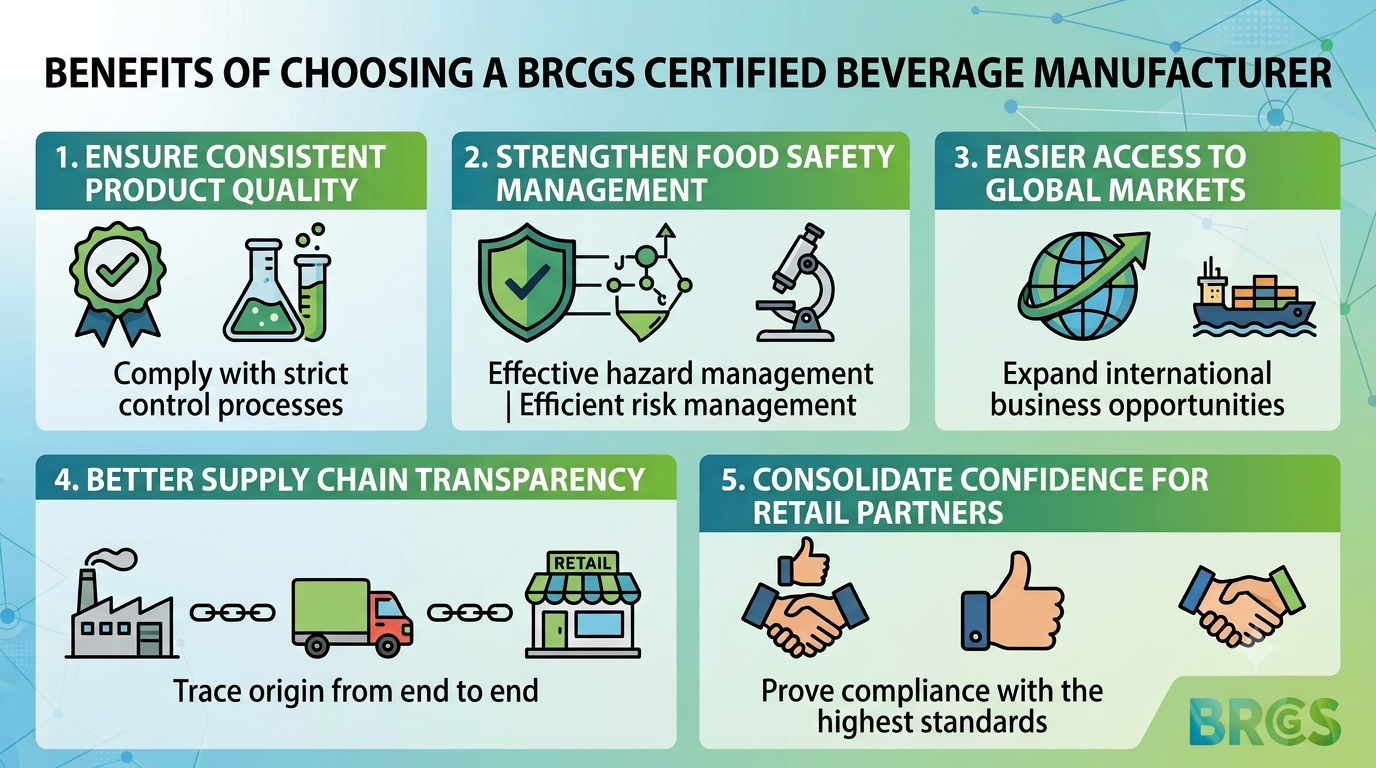
Benefits of Choosing a BRC Certified Beverage Manufacturer
Selecting a manufacturing partner involves much more than comparing prices or production capacity.
A certified manufacturer provides additional value by reducing operational risks, improving product consistency, and supporting long-term business growth.
Here are some of the key advantages of working with a BRC certified beverage manufacturer.
Consistent Product Quality
Every successful beverage brand relies on consistency.
Consumers expect the same flavor, color, aroma, texture, and overall drinking experience every time they purchase a product. Even small variations can affect customer satisfaction and brand reputation.
BRCGS-certified manufacturers follow documented production procedures and strict quality control systems to minimize variation between production batches.
From ingredient inspection to finished product evaluation, every stage is monitored to ensure products consistently meet agreed specifications.
For growing beverage brands, this consistency helps build consumer trust and supports long-term brand loyalty.
Stronger Food Safety Management
Food safety is one of the primary reasons many global brands choose certified manufacturers.
BRCGS requires companies to establish comprehensive food safety management systems that identify potential risks before they affect production.
These systems typically include:
- Hazard analysis
- Preventive controls
- Sanitation procedures
- Environmental monitoring
- Corrective action plans
- Continuous verification
By integrating these practices into daily operations, manufacturers create a safer production environment while reducing the likelihood of product recalls or quality incidents.
For customers, this means greater confidence that every product has been manufactured under carefully controlled conditions.
Easier Access to Global Markets
Expanding into international markets often requires more than an attractive product.
Importers, distributors, and retailers increasingly evaluate manufacturing standards before approving new suppliers.
Working with a BRC certified beverage manufacturer demonstrates that your production partner already operates according to internationally recognized food safety requirements.
This can make supplier evaluations more efficient and improve confidence during discussions with potential buyers, particularly in markets where food safety expectations are especially high.
Rather than proving manufacturing capabilities from the beginning, brands can rely on internationally recognized certification to support their credibility.
Better Supply Chain Transparency
A reliable supply chain is built on visibility.
For global beverage brands, knowing where ingredients come from, how products are manufactured, and how quality is monitored is just as important as the finished product itself.
BRCGS certification requires manufacturers to establish clear documentation and traceability systems throughout the production process. Every batch of raw materials, packaging materials, and finished products can be tracked and verified when needed.
This level of transparency offers several advantages. It enables manufacturers to identify potential issues more quickly, respond effectively if corrective actions are required, and provide customers with accurate production records.
For importers and retailers managing complex supply chains, transparency reduces uncertainty and strengthens confidence in their manufacturing partners.
Greater Confidence for Retail Buyers
Retailers have become increasingly selective when choosing suppliers.
Large supermarket chains, private label programs, and international distributors often evaluate more than pricing or production capacity. They want assurance that products are manufactured under strict quality management systems that align with global food safety expectations.
Working with a BRC certified beverage manufacturer helps demonstrate that commitment.
Although certification alone does not guarantee business success, it provides buyers with greater confidence that the manufacturer follows internationally recognized standards for quality, safety, and operational management.
For brands entering new retail channels, this added credibility can make supplier evaluations smoother and strengthen long-term business relationships.
What Global Buyers Look for During a Factory Audit
For many international buyers, selecting a beverage manufacturer begins long before the first production order. One of the most important steps in the qualification process is the factory audit.
A factory audit allows buyers to evaluate whether a manufacturer has the systems, capabilities, and management practices needed to produce safe, consistent, and export-ready beverages.
While every buyer has different requirements, most factory audits focus on several key areas.
Food Safety and Quality Management
The first priority is food safety.
Auditors review how the manufacturer identifies potential risks, controls production processes, manages sanitation, and ensures products meet both regulatory and customer requirements.
A well-implemented quality management system demonstrates that food safety is embedded throughout daily operations rather than treated as a final inspection step.
Production Facilities and Equipment
Modern equipment alone is not enough.
Buyers also assess how production lines are maintained, cleaned, and monitored to ensure consistent performance.
They often evaluate:
- Production capacity
- Equipment maintenance programs
- Cleaning and sanitation procedures
- Calibration systems
- Production flow
These factors help determine whether the factory can consistently manufacture products at commercial scale.
Traceability and Documentation
Documentation plays a critical role during factory audits.
Global buyers expect manufacturers to maintain accurate production records, ingredient documentation, quality reports, and traceability systems.
Effective documentation allows manufacturers to quickly identify production batches, investigate quality concerns, and demonstrate compliance with customer specifications.
Research and Development Capability
Many beverage brands are looking for more than a contract manufacturer.
They want an innovation partner.
As a result, buyers increasingly evaluate the manufacturer’s R&D capabilities, including formulation expertise, pilot testing, product customization, and technical support.
A strong R&D team enables brands to develop differentiated products while reducing development time and accelerating market entry.
Communication and Continuous Improvement
Successful manufacturing partnerships depend on communication as much as production capability.
Buyers appreciate manufacturers that provide transparent updates, respond quickly to technical questions, and actively seek opportunities for continuous improvement.
Strong communication helps prevent misunderstandings and creates a more collaborative working relationship over time.
How BRC Supports OEM & Private Label Production
OEM and private label manufacturing require close collaboration between brands and manufacturers.
Customers often share proprietary formulations, product concepts, packaging designs, and commercialization strategies long before production begins. Managing this information professionally is essential for building trust.
BRCGS supports OEM and private label production by encouraging structured management systems that improve consistency, documentation, and operational control throughout the manufacturing process.
For beverage brands, this creates several important advantages.
Supporting Product Consistency
Whether producing one batch or one million bottles, consistency remains essential.
Documented manufacturing procedures help ensure that products maintain the same quality, taste, appearance, and specifications across every production run.
Strengthening Product Traceability
Private label products often serve multiple markets with different regulatory requirements.
BRCGS encourages manufacturers to maintain detailed documentation that supports product traceability from raw material sourcing through finished goods.
This makes quality verification and export documentation more efficient.
Building Customer Confidence
Brands invest significant resources into developing their products.
Working with a manufacturer that operates under internationally recognized standards provides additional confidence that products will be produced responsibly and consistently.
Ultimately, BRCGS supports more efficient collaboration between beverage brands and manufacturing partners throughout the entire product lifecycle.
Why WANA Beverage Invests in Global Food Safety Standards
At WANA Beverage, quality is not viewed as a certification—it is part of how we build long-term partnerships with customers around the world.
As an OEM, ODM, and private label beverage manufacturer, we understand that every product represents our customers’ reputation. That’s why we continue investing in internationally recognized food safety systems, advanced manufacturing technology, and continuous process improvement.
Manufacturing with International Standards
WANA Beverage operates under internationally recognized quality management systems to support customers serving both domestic and export markets.
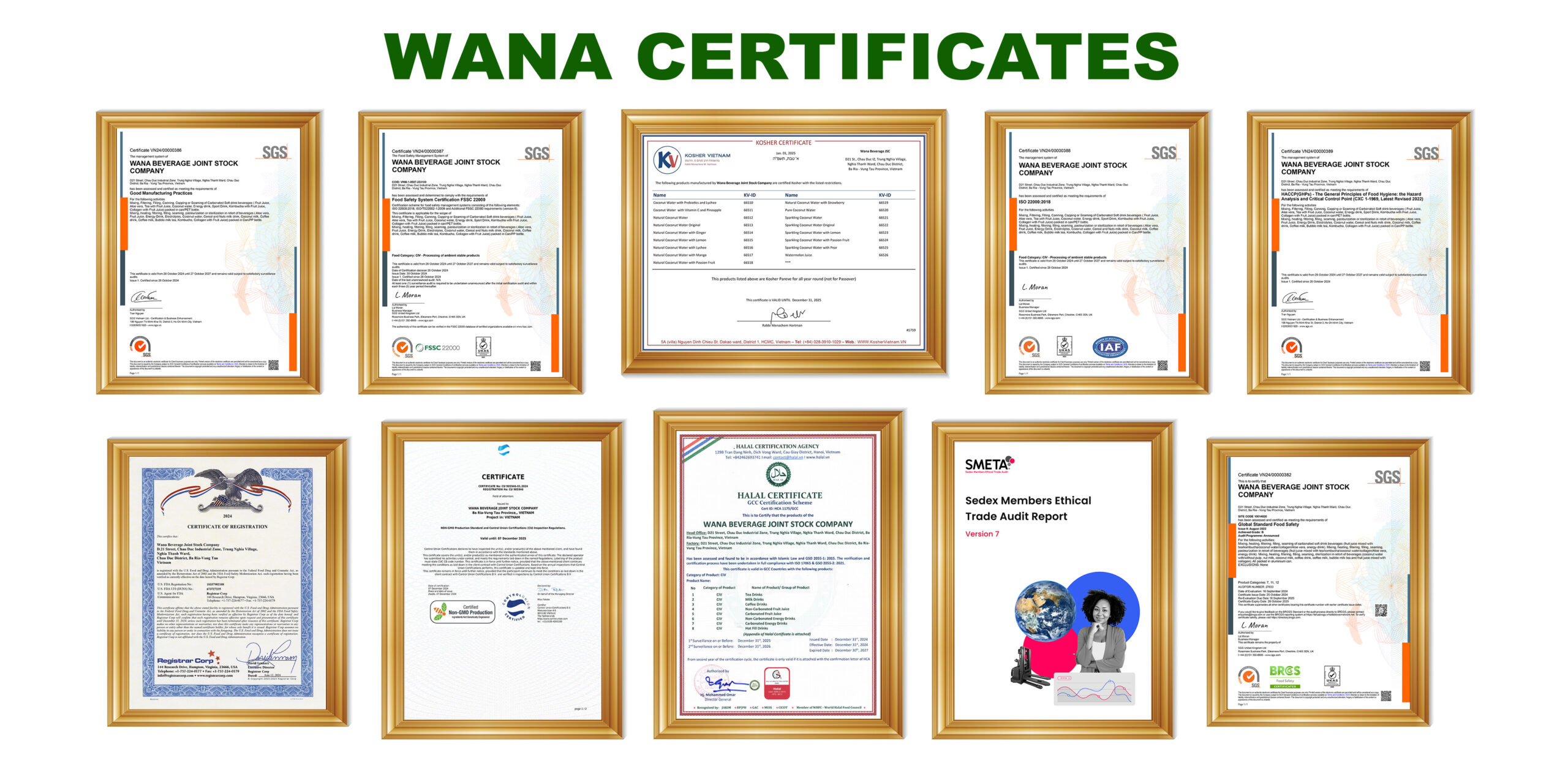
Our manufacturing standards include:
- BRCGS
- FDA Registration
- HACCP
- ISO 22000
- GMP
- HALAL
- SEDEX SMETA
These certifications reflect our commitment to maintaining safe, consistent, and transparent manufacturing practices.
Advanced Production Capabilities
Our production facility is designed to manufacture a wide range of beverage categories, including:
- Fruit Juice
- Coconut Water
- Sparkling Drinks
- Functional Beverages
- Energy Drinks
- Coffee Drinks
- Tea Drinks
- Aloe Vera Drinks
With modern production lines and experienced technical teams, we help customers transform innovative concepts into market-ready products.
Supporting OEM, ODM and Private Label Brands
Every brand has unique goals.
Some customers arrive with a finished formulation, while others need support from concept development through commercialization.
Our R&D team works closely with customers to develop customized beverage formulations, optimize packaging solutions, and prepare products for international markets.
Combined with structured quality systems and export experience, WANA Beverage helps brands move from idea to production with greater confidence.
Frequently Asked Questions
Is BRC certification mandatory?
No. BRCGS certification is generally voluntary. However, many international retailers, importers, and private label buyers prefer or require suppliers to hold BRCGS certification as part of their supplier qualification process.
Is BRC better than HACCP?
Not necessarily.
HACCP focuses on identifying and controlling food safety hazards, while BRCGS is a broader food safety and quality management standard that incorporates HACCP principles alongside additional requirements for quality systems, traceability, facility management, and continuous improvement.
Many manufacturers implement both standards together.
Does BRC help beverage exports?
Yes.
Although BRCGS certification does not guarantee market access, it often strengthens a manufacturer’s credibility and can simplify supplier approval for international buyers, particularly retailers and distributors with strict food safety requirements.
What products can a BRC certified beverage manufacturer produce?
A BRC-certified manufacturer can produce a wide variety of beverages, including fruit juices, coconut water, sparkling drinks, energy drinks, functional beverages, tea, coffee, plant-based beverages, and many other customized OEM or private label products.
Can startups work with a BRC certified OEM manufacturer?
Absolutely.
Many BRC-certified manufacturers work with startups, helping them develop formulations, validate concepts, and scale production while maintaining internationally recognized food safety standards.
In Conclusion
Choosing a beverage manufacturer is about more than production capacity or competitive pricing. It is about finding a partner that can consistently deliver safe, high-quality products while supporting your brand’s long-term growth.
Working with a BRC certified beverage manufacturer gives brands greater confidence that their products are produced under internationally recognized food safety and quality standards. From consistent production and stronger traceability to improved supplier credibility, BRCGS certification helps create a solid foundation for successful OEM and private label partnerships.
As global food safety expectations continue to evolve, manufacturers that invest in internationally recognized standards are better positioned to support brands entering competitive markets around the world.
If you’re looking for a trusted BRC certified beverage manufacturer, explore WANA Beverage’s OEM, ODM, and private label solutions. Our experienced team is ready to help you develop safe, innovative, and market-ready beverages that meet international standards.