Why Choosing a Discreet Beverage Manufacturer Matters
Launching a new beverage brand is an exciting opportunity—but it also comes with significant risks. Behind every successful energy drink, juice, sparkling beverage, or functional drink is more than just an appealing package. There are months of research, product testing, formula refinement, branding, and market positioning. For many businesses, the beverage formula itself becomes one of their most valuable business assets.
Choosing the wrong manufacturing partner can put that investment at risk. While production capacity, pricing, and lead time are important, they shouldn’t be the only factors influencing your decision. A professional manufacturer should also demonstrate strong confidentiality practices, transparent communication, and a commitment to protecting your intellectual property throughout the entire product development process.
This is where working with a discreet beverage manufacturer becomes essential.
A discreet manufacturer understands that every formula, ingredient combination, and product concept is confidential. They implement processes to safeguard client information, limit access to sensitive data, and ensure your ideas remain protected before, during, and after production. This level of professionalism is particularly important for startups launching innovative beverages, established brands expanding into new categories, and distributors developing exclusive private-label products.
Before signing any manufacturing agreement, asking the right questions can help you evaluate not only a factory’s production capabilities but also its reliability, transparency, and long-term commitment to your business.
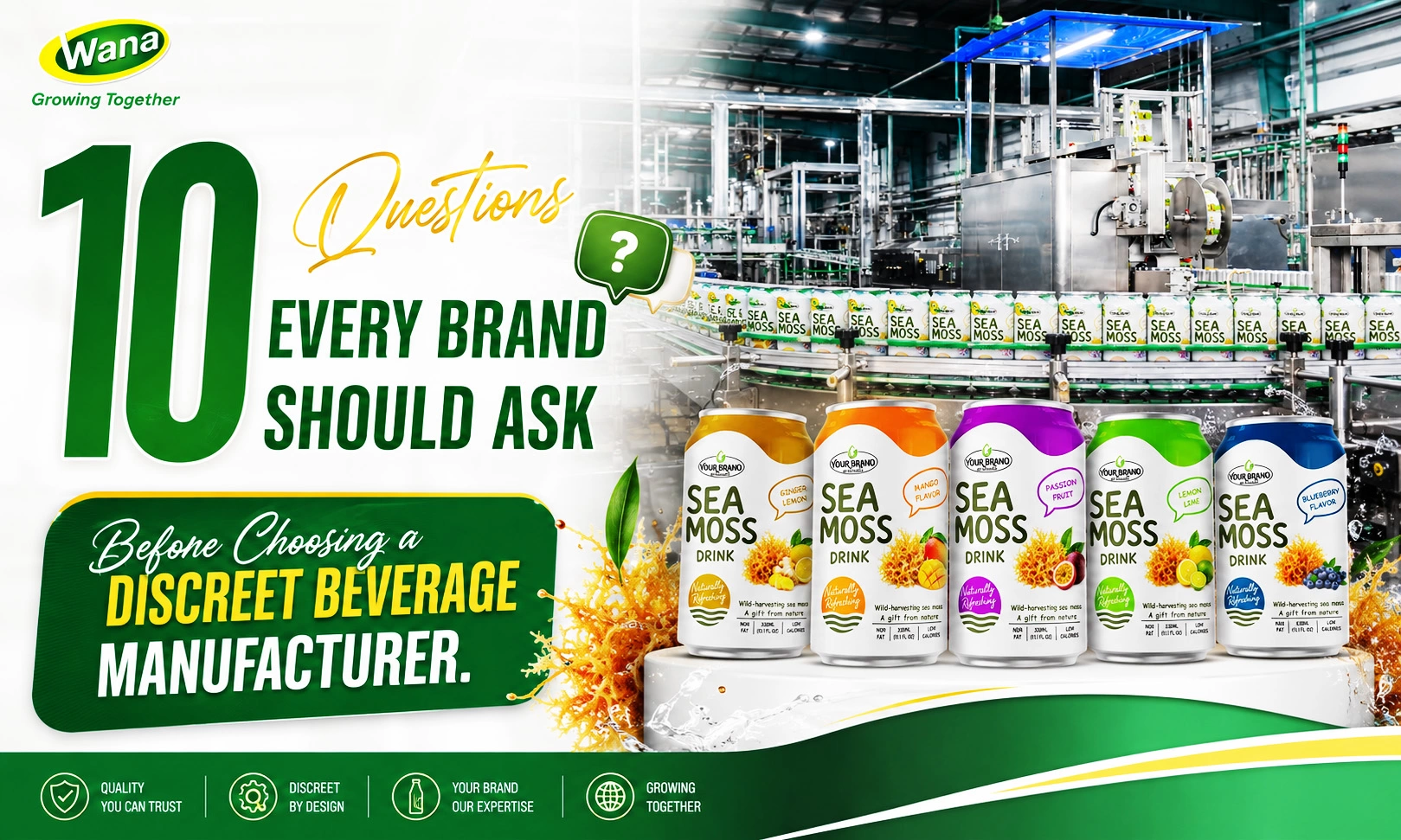
Here are ten essential questions every beverage brand should ask before choosing a discreet beverage manufacturer.
1. Do You Offer Custom Formula Development?
Every successful beverage begins with a formula that reflects a brand’s vision and meets the expectations of its target consumers. Whether you’re developing a premium energy drink, a functional beverage with added vitamins, or a low-sugar fruit juice, your manufacturing partner should have the technical expertise to transform your concept into a commercially viable product.
Ask whether the manufacturer has an in-house research and development (R&D) team or relies on pre-made formulations. A capable OEM partner should be able to develop recipes from scratch, modify existing formulations, and provide multiple product samples for evaluation before mass production begins.
Beyond creating a great-tasting beverage, formula development also involves technical considerations such as ingredient compatibility, pH balance, shelf-life stability, carbonation performance, and compliance with food safety regulations. These factors directly affect product quality, consistency, and consumer satisfaction.
A manufacturer that invests in experienced food technologists and modern laboratory testing is better equipped to help your brand create products that are not only innovative but also scalable for commercial production.
When evaluating a discreet beverage manufacturer, remember that product innovation and confidentiality should go hand in hand. Your ideas deserve both technical expertise and secure handling throughout the development process.
2. Who Owns the Beverage Formula?
Formula ownership is one of the most important topics to clarify before signing any manufacturing agreement, yet it is often overlooked by first-time beverage entrepreneurs.
If you’ve invested time and resources into developing a unique recipe, you should clearly understand who retains ownership of that intellectual property after production begins.
Some manufacturers develop formulas exclusively for their clients, while others may retain certain rights depending on the agreement. Without clear documentation, misunderstandings can arise later—especially if you decide to change manufacturing partners or expand production in different regions.
A trustworthy manufacturer should be transparent about intellectual property policies from the beginning. Questions worth asking include:
- Is the formula developed exclusively for my brand?
- Will ownership be transferred after development?
- Can I move the formula to another manufacturing facility in the future?
- How will confidential formulation data be stored and managed?
Having these discussions early helps protect your business interests and establishes a stronger foundation for long-term collaboration.
Remember, your beverage formula is more than a list of ingredients. It represents your product’s unique value in a competitive marketplace and should be treated as a strategic business asset.
Read more: “Beverage OEM Supplier Confidentiality: How Manufacturers Protect Your Formula”
3. How Do You Protect Client Confidentiality?
Confidentiality is what separates a standard manufacturer from a truly discreet beverage manufacturing partner.
Throughout a beverage project, manufacturers gain access to valuable information—including product concepts, ingredient selections, pricing strategies, packaging designs, marketing plans, and technical formulations. Without appropriate safeguards, this information could be exposed to unnecessary risks.
Ask potential manufacturers about the specific measures they use to protect confidential client information.
For example:
- Do they sign Non-Disclosure Agreements (NDAs) before discussing product concepts?
- Are formulation documents stored securely with restricted access?
- Is sensitive project information shared only with authorized personnel?
- Are digital files protected through secure document management systems?
- How are prototype samples identified, stored, and disposed of?
A professional manufacturer should be able to explain these procedures clearly rather than providing vague assurances.
Confidentiality is not only about legal agreements; it is also about company culture and operational discipline. Manufacturers that prioritize discretion typically establish internal protocols to minimize unnecessary access to confidential information and ensure every employee understands the importance of protecting client assets.
Choosing a partner with robust confidentiality practices gives your business greater confidence to innovate without worrying that your ideas may be compromised.
4. What Certifications and Quality Standards Do You Follow?
Certifications are more than logos displayed on a website—they provide evidence that a manufacturer operates according to recognized food safety and quality management systems.
When evaluating a beverage manufacturer, ask which certifications they maintain and how those standards are applied throughout production.
Depending on your target market, relevant certifications may include food safety management systems, quality management standards, or certifications required for specific export destinations. However, certifications alone should not be the only consideration.
It’s equally important to understand how quality standards are implemented in day-to-day operations.
Ask questions such as:
- How are incoming raw materials inspected?
- What quality checks take place during production?
- How is batch traceability maintained?
- What testing is performed before products are released?
- How are customer complaints investigated and resolved?
Manufacturers with well-established quality systems can usually explain these processes in detail and provide documentation when required.
For beverage brands targeting international markets, consistent quality is essential not only for consumer satisfaction but also for regulatory compliance and long-term business growth. Working with a manufacturer that combines recognized certifications with disciplined quality management helps reduce operational risks while strengthening your brand’s reputation in competitive global markets.
5. Will My Formula Be Used for Other Clients?
One of the biggest concerns for beverage brands is whether their proprietary formula could be reused for another customer. If you’ve invested significant time and resources in developing a unique product, the last thing you want is to see a similar beverage appear under a competing brand.
This is why it’s important to discuss formula exclusivity before signing any manufacturing agreement.
A reputable discreet beverage manufacturer should clearly explain its policies regarding intellectual property and formula usage. If the formula is developed specifically for your brand, the manufacturer should confirm whether it will remain exclusive to your business and under what terms. These details should always be documented in a formal agreement rather than relying on verbal assurances.
You should also ask how the manufacturer distinguishes between custom-developed formulas and its own standard formulations. Some factories offer both OEM and private label services, making it essential to understand which category your product falls into.
Questions worth asking include:
- Is my formula developed exclusively for my brand?
- Can the same formula be sold to another customer?
- What contractual protections are in place to prevent unauthorized use?
- How do you manage exclusive product development projects?
A trustworthy manufacturing partner understands that protecting your competitive advantage is just as important as producing a high-quality beverage. Clear policies on formula exclusivity demonstrate professionalism and build the trust necessary for a long-term partnership.
6. Can You Support Product Customization?
Today’s beverage market is driven by innovation. Consumers are looking for products that align with their lifestyles, whether that’s a low-sugar energy drink, a vitamin-enriched sparkling beverage, or a fruit juice made with functional ingredients. As a result, flexibility in product customization has become one of the most important qualities of an OEM manufacturing partner.
A capable beverage manufacturer should be able to customize far more than just the formula. Ask whether they can support adjustments across multiple aspects of product development, including:
- Ingredient selection
- Flavor profiles
- Sweetness levels
- Functional ingredients
- Carbonation
- Packaging formats
- Can or bottle sizes
- Labeling and artwork
Customization should also take your target market into account. Consumer preferences vary across regions, and a product designed for Southeast Asia may differ significantly from one intended for Europe or North America. An experienced manufacturer can provide valuable insights into local market trends while ensuring your product complies with destination market regulations.
Choosing a manufacturer with strong customization capabilities allows your brand to create products that stand out, rather than competing solely on price.
7. How Do You Ensure Product Quality?
A successful beverage brand depends on one thing above all else—consistency. Customers expect every can or bottle they purchase to deliver the same taste, appearance, and quality every time.
Maintaining that consistency requires more than modern production equipment. It requires a comprehensive quality management system that monitors every stage of manufacturing.
When evaluating a beverage manufacturer, ask how quality is managed throughout the production process.
Key areas to explore include:
- Inspection of incoming raw materials
- Supplier qualification procedures
- In-process quality control during production
- Laboratory testing of finished products
- Packaging integrity inspections
- Product traceability systems
Quality assurance should continue even after production is complete. Reliable manufacturers retain production records and reference samples, enabling them to investigate issues quickly if concerns arise in the marketplace.
Rather than simply asking whether a manufacturer has quality certifications, ask how those standards are applied in daily operations. Their ability to explain real production procedures often reveals far more than a list of certificates.
Ultimately, consistent quality protects not only consumers but also your brand reputation. Even a single quality issue can affect customer trust, making a manufacturer’s quality culture an important factor in your decision.
8. Who Has Access to My Project Information?
Protecting confidential information is not only about technology—it also depends on people.
During product development, your manufacturer will have access to sensitive information such as your formula, ingredient specifications, packaging designs, pricing strategy, production schedule, and future product plans. If this information is widely accessible within the factory, the risk of accidental disclosure increases.
A discreet beverage manufacturer should follow a “need-to-know” approach, where only employees directly involved in your project have access to confidential information.
When discussing confidentiality, ask questions such as:
- Which departments will have access to my formula?
- Are confidential files restricted to authorized personnel?
- How is employee access controlled?
- Are confidentiality policies included in staff training?
Professional manufacturers often combine internal procedures with secure digital systems to minimize unnecessary information sharing.
The goal is not secrecy for its own sake—it is responsible information management. A manufacturer that limits access to sensitive project data demonstrates respect for your business and reduces unnecessary risks throughout the development process.
9. How Do You Handle Confidential Documents and Samples?
Formula documents, product specifications, laboratory reports, and prototype samples are valuable business assets. Without clear management procedures, these materials can easily become sources of information leakage.
Ask your manufacturer how confidential project documents are stored, updated, and protected throughout the product lifecycle.
For example:
- Are formulation records stored digitally or physically?
- Who can access confidential files?
- How are different versions of formulas managed?
- What happens to outdated documents?
- How are prototype samples labeled and stored?
Sample management is equally important. Prototype beverages should be tracked carefully, with clear procedures for storage, testing, and disposal. Proper documentation helps prevent confusion between projects while protecting confidential formulations.
Manufacturers with organized document control systems generally operate more efficiently and provide greater confidence that sensitive information is being handled responsibly.
Strong document management may seem like a small operational detail, but it reflects the overall professionalism of a manufacturing partner and their commitment to protecting client intellectual property.
10. Can You Grow with My Brand?
Choosing a beverage manufacturer is not just about meeting today’s production requirements. It’s about finding a partner capable of supporting your business as it evolves.
Many beverage brands begin with relatively small production runs to validate market demand. As sales increase, production requirements often expand rapidly. Switching manufacturers during this growth phase can introduce unnecessary challenges, including product consistency issues, regulatory delays, and additional costs.
Ask potential manufacturing partners whether they can support your business in the long term.
Topics to discuss include:
- Production capacity for future expansion
- Additional packaging formats
- New product development capabilities
- Export support for new markets
- Ongoing technical and regulatory assistance
Equally important is whether the manufacturer can maintain the same level of confidentiality as your business grows. As production volumes increase and more teams become involved, strong confidentiality procedures should remain consistent.
The best manufacturing relationships are built on trust, transparency, and shared growth. A discreet beverage manufacturer should not only help you launch your first product but also provide the expertise and operational support needed to expand your portfolio and enter new markets with confidence.
Conclusion
Choosing a beverage manufacturer is about far more than comparing prices, production capacity, or lead times. For brands investing in innovative products, proprietary formulas, and long-term market growth, selecting the right manufacturing partner is ultimately a decision built on trust.
A truly discreet beverage manufacturer does more than produce beverages. They protect your confidential information, respect your intellectual property, maintain consistent product quality, and provide the technical expertise needed to turn your ideas into commercially successful products. From formula development and quality assurance to document management and secure production practices, every stage of the manufacturing process should reinforce your confidence that your brand is in capable hands.
By asking these ten questions before signing a manufacturing agreement, you can better evaluate whether a potential partner aligns with your business goals and values. Their answers will reveal not only their production capabilities but also their commitment to transparency, professionalism, and long-term collaboration.
Remember, the right manufacturing partner should contribute to your competitive advantage—not become a potential risk to it.
Why Brands Choose WANA Beverage
At WANA Beverage, we understand that every beverage concept represents months of research, creativity, and investment. That’s why confidentiality is integrated into every stage of our OEM and private label manufacturing process.
Our team works closely with beverage brands around the world to develop custom formulations while maintaining strict standards for quality, information security, and production consistency. Whether you’re launching a new energy drink, fruit juice, sparkling beverage, or functional drink, we provide flexible manufacturing solutions designed to support your brand from concept to commercialization.
Here are Wana’s Product
With more than 20 years of beverage manufacturing experience, export +50 countries, advanced production technology, and export capabilities serving global markets, WANA Beverage is committed to helping our partners bring innovative products to market with confidence.
WANA Beverage also operates under internationally recognized quality and food safety systems, including:
- FDA Registration
- HACCP
- ISO 22000
- GMP
- HALAL
- FSSC 22000
- SEDEX SMETA
These standards support consistent manufacturing practices, product traceability, and disciplined operational procedures throughout the production process.
Ready to Build Your Beverage Brand with Confidence?
If you’re looking for a discreet beverage manufacturer that values confidentiality as much as product quality, WANA Beverage is ready to support your next project.
Whether you already have a proprietary formula or are starting with a new product concept, our specialists can guide you through every stage of beverage development—from R&D and packaging to manufacturing and international export.
Contact WANA Beverage today to discuss your project, request a consultation, or explore our OEM and private label beverage manufacturing solutions. Together, we’ll help transform your beverage idea into a market-ready product while protecting what matters most—your brand and your innovation.